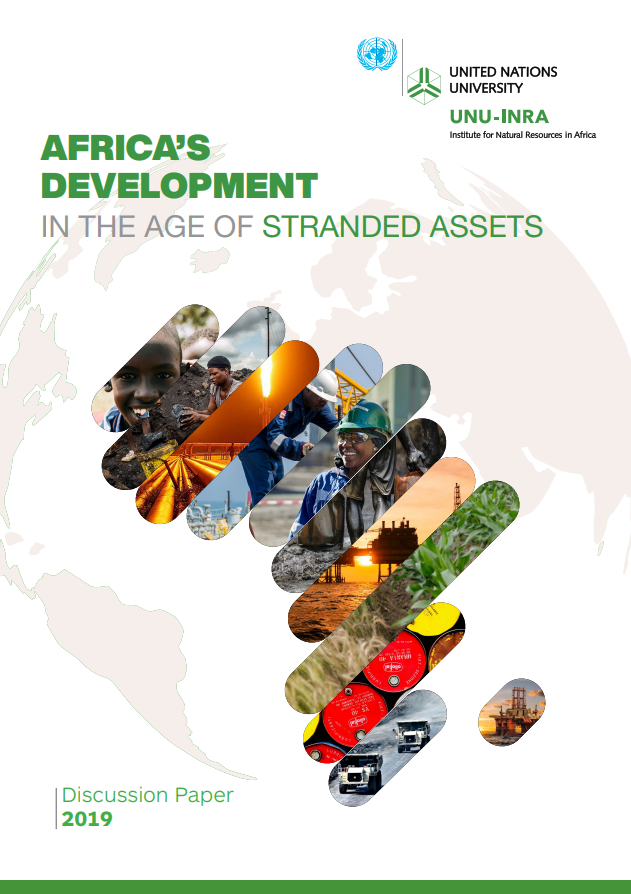
United Nations University – Institute for Natural Resources in Africa (UNU-INRA): Africa’s development in the age of stranded assets
The challenge
UNU–INRA’s research team had identified a critical gap in the climate-policy conversation: Africa’s ‘stranded asset’s risk, or the possibility that oil, gas, coal and mineral wealth could lose its value as the world shifts to a low-carbon economy, threatening economic sectors that dozens of developing African countries depend on without a ‘just transition’ away from fossil fuels. The research spanned field visits to Angola, Ghana, Namibia, Niger, Nigeria, Tanzania, South Africa and Zambia, resulting in close to 100 consultations. The task was to turn that sprawling, technical body of research into a flagship discussion paper capable of shifting a policy agenda – clear enough for non-specialist policymakers and funders, while holding up to scrutiny from the scientists and researchers behind it.
My approach
Acting as communications consultant and developmental editor, I worked directly with scientists and researchers from across Africa, alongside the steering group. Rather than simply editing a finished draft, I met with researchers in Accra and led writing workshops to align contributors on structure, argument and voice before drafting began, then served as penholder to shape the collective research into a single coherent narrative.
What I did
- Advised on the overall project communications strategy and messaging approach.
- Designed and led writing workshops for researchers and the steering group to build a shared approach to structure and argument.
- Acted as penholder for the report itself, working directly with scientists and researchers from across Africa to translate dense research and country case-study data into a clear, policy-facing narrative.
- Worked across eight country case studies (Angola, Ghana, Namibia, Nigeria, South Africa, Tanzania, Zambia, Niger) plus a deep-dive on Niger, ensuring consistent framing and readability throughout.
- Distilled the paper’s argument into a concise set of key messages upfront, designed for policymakers who might not read past the first page.